
Honeycomb Paper vs Bubble Wrap: A Data – Driven Comparison Every Business Should Read
Packaging decisions are more than just about protecting products on the way. There are several factors that businesses need to take into account, including storage, sustainability, handling, shipping efficiency, and customer experience. For years, bubble wrap has been the king of protective packaging – it was cheap, it did the work of protecting products, and it was tried and tested. However, now consumers are asking questions instead of blindly adopting old practices. Honeycomb Paper is emerging as a viable solution for companies looking for a dependable yet eco-friendly barrier that reduces plastic usage.
The “cushioning” question is not just one anymore. Packaging performance needs to be evaluated by businesses throughout the packaging journey. This encompasses storage, usage, disposal, and perception by the customer. Businesses are getting a better grip on protective packaging with solutions like Eco-Friendly Packaging.
Honeycomb Paper vs Bubble Wrap: What Is the Difference?
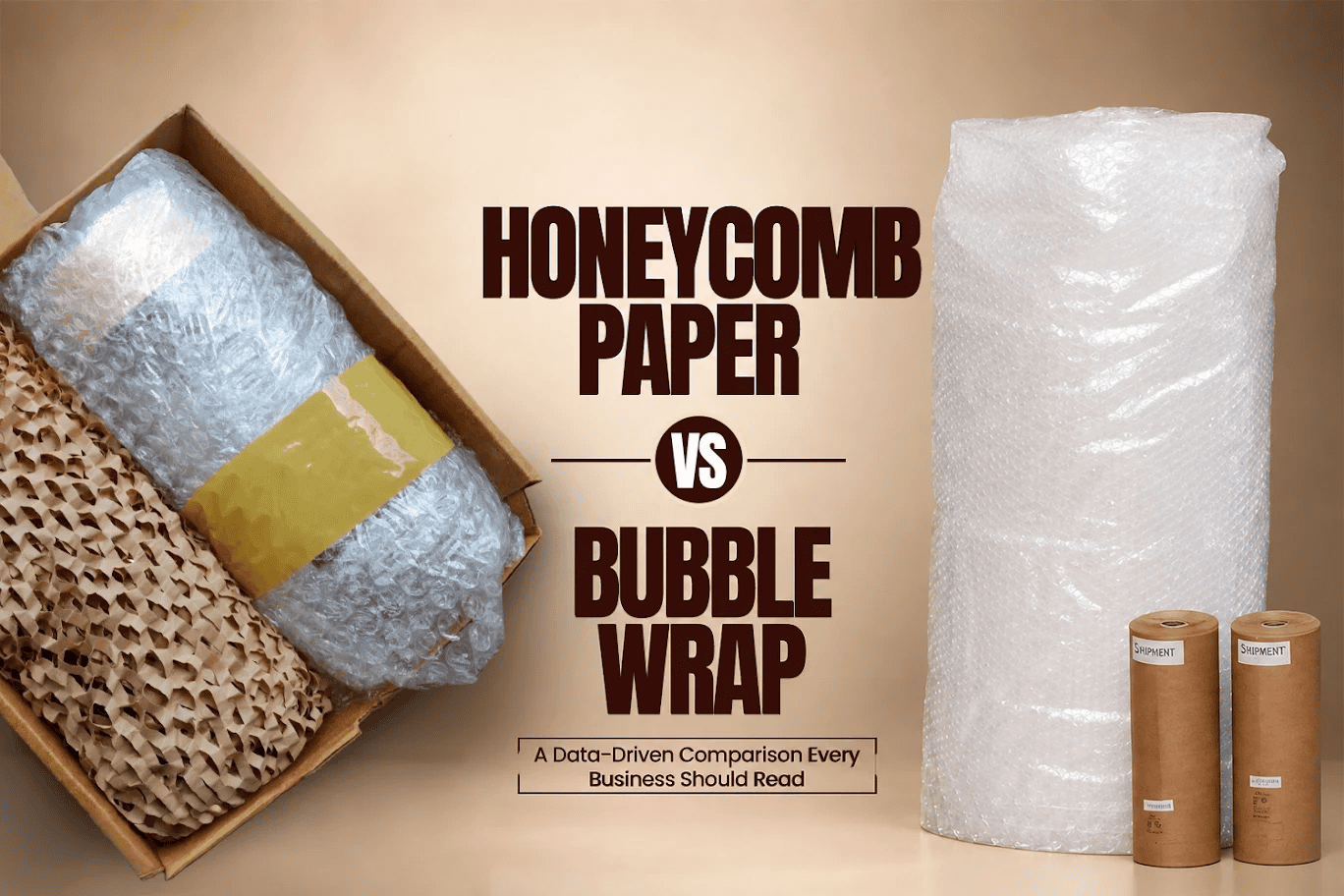
Bubble wrap is a plastic material that has air-filled pockets to provide cushioning for products while they are being transported. Light protection against common impacts. These rolls are widely used across industries for fragile protection during transit and these large rolls take up much space in the warehouse.
Instead, Honeycomb Paper is made with kraft paper. It is stretched to create hexagonal cells that form a 3D honeycomb structure that provide the same cushion as plastic air bubbles to safeguard products. The structure is able to distribute impact across the surface and conform around various product shapes, making it a very adaptable alternative to plastic bubble wraps.
Storage Space Can Impact the Packaging Equation
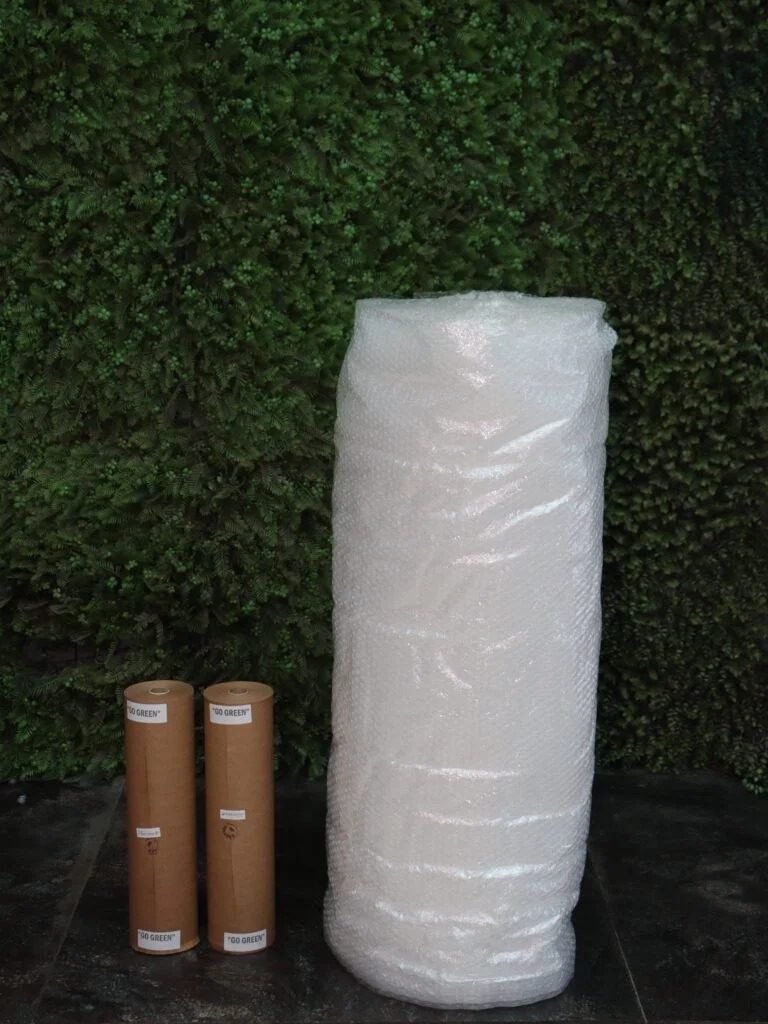
When it comes to packaging materials, storage is something that is easily forgotten. Bubble wrap is delivered unexpanded and takes up a lot of space in the warehouse. As a result the inventory turnaround gets impacted, which means businesses cannot stock larger quantities of bubble wraps – leading to additional transport cost. This can prove difficult for larger businesses with a high volume of shipping.
Honeycomb Paper keeps its shape as it is placed on a table in the form of rolls. The storage area it takes up is approx. 80 to 90% lesser than bubble wrap, which is a huge amount of space in warehouses to dedicate to other operational activities. Further, due to this volumetric difference, businesses can order honeycomb paper for a much longer period of time than bubble wraps – for instance if a business orders bubble wrap stock worth of 1 week, in the same shipment honeycomb EcoCushion rolls can be ordered for about 5 weeks! This maximises the efficiency of the warehouse space.
The Best Way To Protect Is To Prevent It
Sustainable packaging can only be achieved if the product is protected. Damaged products result in replacements, returns, further shipping, and packaging waste. For businesses, therefore, they need materials that cope with transportation well.
Cushioning is produced in Honeycomb Paper by its 3D structure. The network of hexagon cells spreads out the pressure and absorbs shock over the wrapped surface. This would be ideal for glassware, ceramics, electronics, bottles, and other sensitive items. This has been proven by the use cases of our thousands of clients who have conducted a series of drop tests across different product categories
Is Honeycomb Paper Stronger Than Bubble Wrap?
Strength is related to the product, packaging form, and transportation conditions. Bubble wrap provides cushion because of the air filled in bubbles – the higher the micron of plastic the stronger the bubble wrap.
Honeycomb Paper is different, however, using its structural strength. It has hexagonal cells which form a 3D honeycomb structure, that 3D shape acts as a shock absorber by spreading out the forces within the material. This forms a protective barrier which secures a product.
All in all, honeycomb paper provides the same or even better levels of cushioning than plastic bubble wraps. The key is to remember to wrap the product according to the size, weight and fragility – same logic that is applied even while using a plastic bubble wrap.
Eco-Friendly Packaging Can Reduce Plastic Dependence
With the scaling up of ecommerce and dependence on packaging materials, packaging buyers and even end consumers are increasingly considering environmental factors. There are increasing expectations of businesses to reduce waste and to be sustainable. Across many applications, plastic packaging is becoming more and more under pressure.
As paper-based and recyclable, Eco Cushion Paper is an unbeatable innovation in the eco-friendly packaging category. This paper is also compostable and/or biodegradable under certain conditions. Companies can lower their plastic consumption without compromising practical protection. This also enables companies to save huge costs related to EPR and plastic waste management compliances, which are slowly and gradually becoming a bigger and bigger cost head.
What About Shipping Costs?
The true cost of packaging goes well beyond the purchase price. With plastic bubble wrap, the hidden costs add up fast – and they’re often overlooked.
Bubble wrap is bulky and lightweight, which means couriers charge you on volumetric weight, not actual weight. This forces most businesses to source it regionally to avoid inflated freight costs – limiting your supplier options and negotiating power.
EcoCushion honeycomb paper wraps are charged on actual weight, not volumetric. This means you can source directly from us regardless of where you’re located in India, with no freight penalty.
The storage advantage compounds this further. Honeycomb hexa rolls take up to 80% less warehouse space than equivalent bubble wrap. That means multiple restocking runs can be consolidated into a single delivery – cutting your transport frequency, your storage footprint, and your handling costs in one move.
Less space. Fewer deliveries. No volumetric surcharge. The numbers add up in your favour.
Is honeycomb paper more expensive than bubble wraps?
If you last compared honeycomb paper to bubble wrap a few years ago, it’s time to look again. The numbers have moved and they’ve moved in honeycomb’s favour.
Plastic prices have surged globally due to geopolitical tensions and supply chain disruptions. Crude oil-derived materials like bubble wrap have seen significant price increases that show no signs of reversing. What was once the “cheap” option is quietly becoming the expensive one.
At the same time, honeycomb paper has gone the other way. As adoption has scaled across industries globally, manufacturing efficiencies have driven costs down considerably. The result is a cost gap that has narrowed and in many cases flipped entirely.
EcoCushion honeycomb paper wraps are now up to 40% cheaper on average than equivalent plastic bubble wrap. Not marginally cheaper. Significantly cheaper – on the material cost alone, before you factor in storage savings, transport consolidation, and reduced EPR compliance costs.
For businesses still assuming bubble wrap is the budget option, the assumption is simply no longer correct. The economics of sustainable packaging have changed. The businesses that recognise this early are the ones locking in the advantage.
Honeycomb Packaging Paper Makes Packing Simpler
When there are hundreds of orders to process, packaging speed becomes a concern. Traditional bubble wrap is sometimes used to hold products in place and requires more tape. If the size of the roll is large, cutting and handling may cause additional fulfilment processes.
In appropriate uses, Honeycomb Paper can be stretched, wrapped, and cut without the use of scissors. It has cells that naturally interlock around products, thus decreasing the amount of tape needed. This can help to streamline packaging processes.
The Unboxing Experience Has Changed
Packaging is seen by customers first, and then the product. Exciting and positive brand perception can be created through clean and professional packaging. Packaging is therefore now an integral part of modern customer experience.
Bubble wrap offers good protection, but looks a bit like plastic. Honeycomb Paper makes for a clearer paper presentation! Its visible structure is easily in line with the expectations of today’s Zero waste Packaging – vouched by the many customer testimonials on our products.
Honeycomb Paper Works Across Industries
Honeycomb Paper is an extremely versatile packaging material. It can be used by ECommerce businesses for glassware, electronics, cosmetics, candles, and ceramics. It can also be used for gifting and premium presentations for retailers.
Honeycomb solutions are also applicable to manufacturing, automotive, or furniture companies and the logistics sector. This versatility allows for different sizes of products and packaging needs to be used.
Why Choose EcoCushion Paper?
Solutions tailored to workflows make switching to packaging materials easier. EcoCushion Paper’s line of paper products is designed to be used in place of plastic cushioning.
It is used to cushion fragile products with its Honeycomb Paper Wraps. EcoCushion BoxFill makes vacuum space in packages secure. The Dispensers at its also assist businesses in stretching and dispensing materials efficiently.
Final Thoughts
The case for switching from bubble wrap to honeycomb paper is no longer just environmental – it’s financial, operational and strategic. Lower material costs, less storage space, simpler handling and a better customer experience, all in one roll.
The question isn’t whether honeycomb paper works. The question is how much longer it makes sense to stay on plastic.
FAQ’s
Is Honeycomb Paper better than bubble wrap?
Honeycomb Paper performs strongly across protection, storage, recyclability, handling, and COSTS. The supplied comparison places it way ahead of plastic bubble wrap across all categories of importance.
Does Honeycomb Paper protect fragile products?
Yes. Its expanded 3D honeycomb structure provides cushioning during transportation. It suits glassware, ceramics, electronics, bottles, and other fragile products. EcoCushion has also obtained Drop test Certification from the Indian Institute of Packaging as well as the SIES School of Packaging.
Does Honeycomb Paper require tape?
Honeycomb Paper can interlock around products when expanded. This can reduce or eliminate additional tape in many applications.
Is Honeycomb Paper an Eco Friendly Packaging solution?
Yes. Honeycomb Paper is paper-based and supports recyclable packaging systems. It is also biodegradable and compostable.