
Honeycomb Paper: Why Packers Are Switching From Bubble Wrap
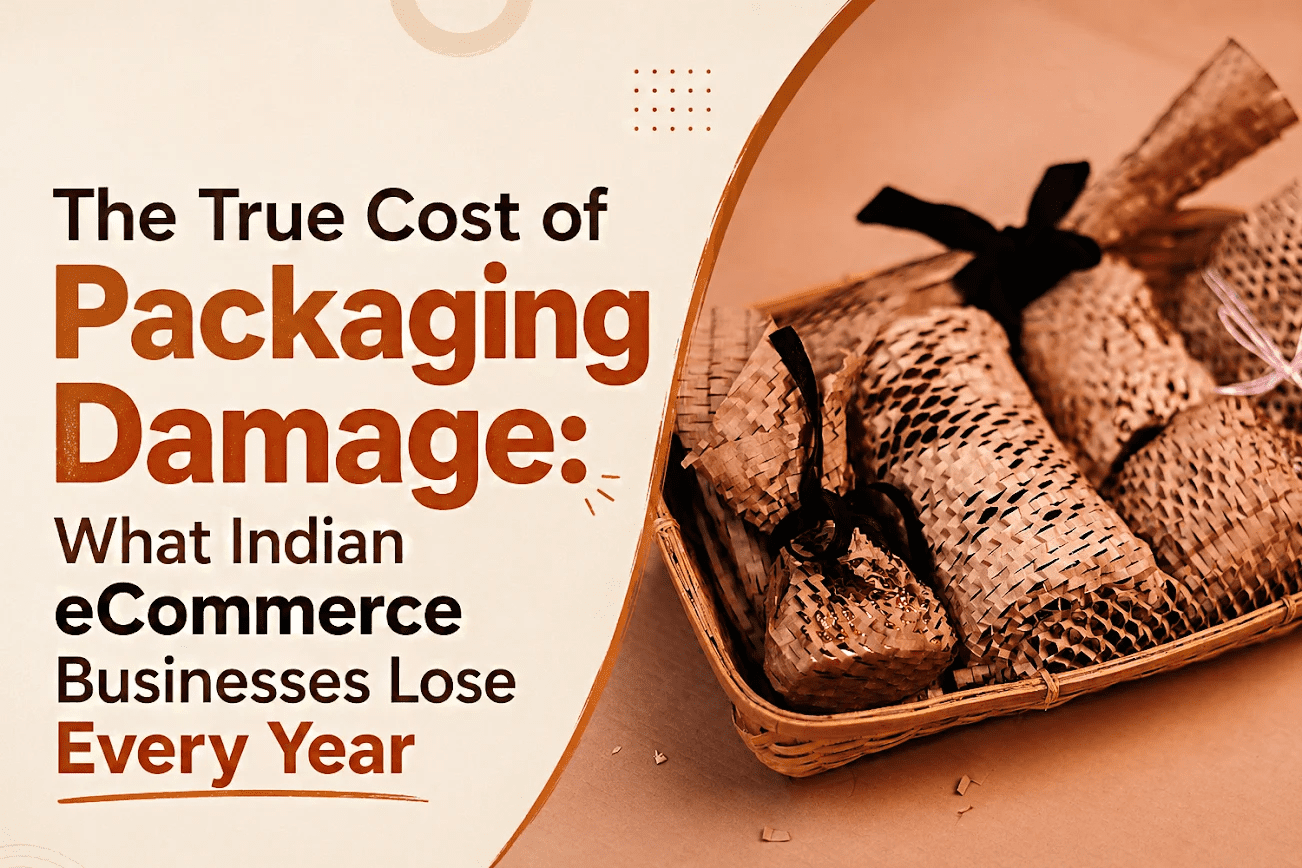
You can do everything right and still get the photo from an angry customer: the jar arrived in pieces. When that happens, the product usually isn’t to blame. The packing is.
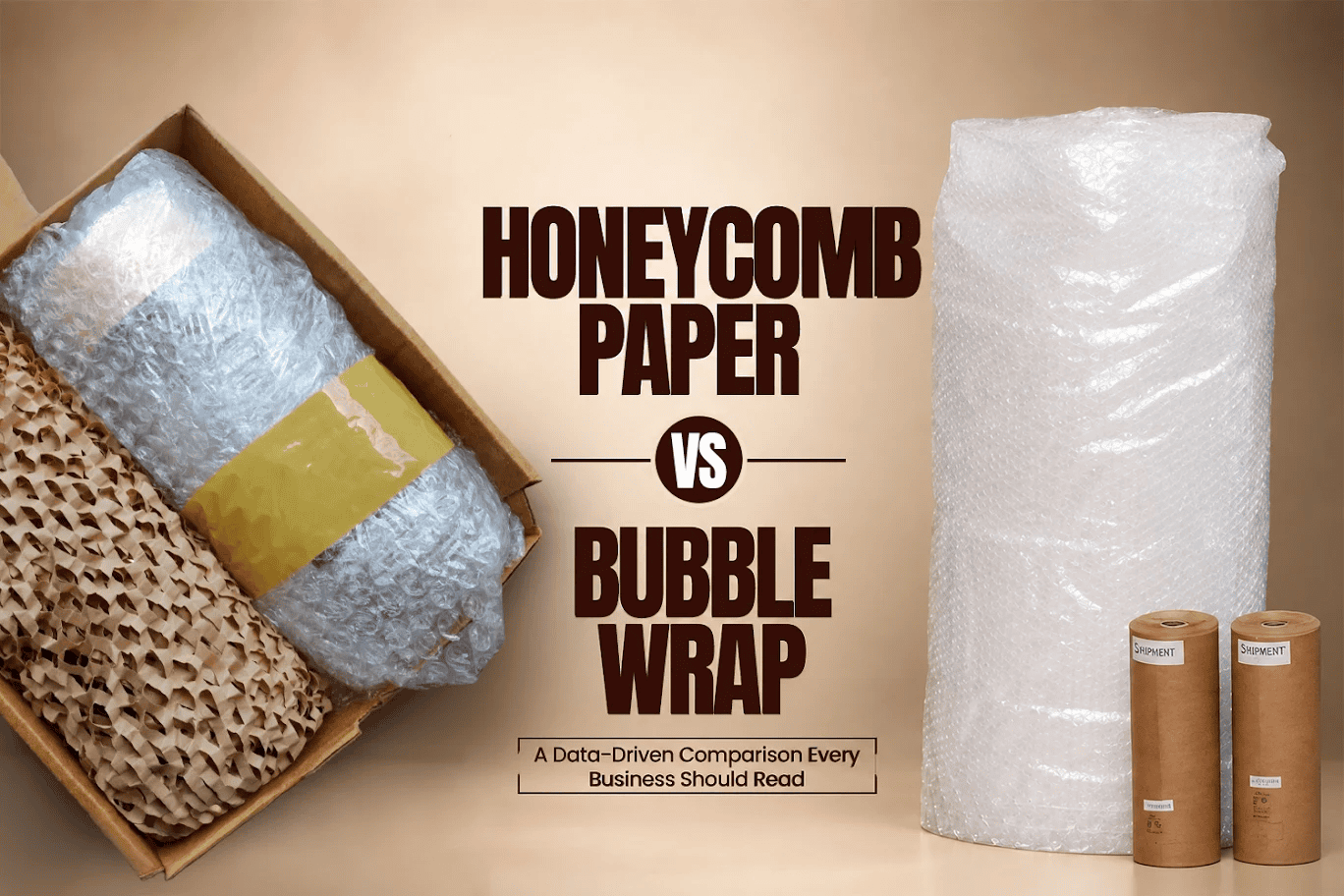
Glassware, cosmetics, kitchenware, décor, electronics. Anything that can chip or crack needs padding, and for years that meant bubble wrap or foam. Plenty of sellers are now rethinking that. Not out of idealism, mostly. Rules are changing, customers notice what lands on their doorstep, and eco-friendly packaging has become a real option rather than a nice-to-have.
Why Plastic Packaging Is Under Pressure
A seller shipping a few hundred orders a day goes through a lot of material. Outer box, wrap, filler, sometimes a second layer. Over a month, that’s a mountain.
India’s rules are catching up with that – The latest plastic packaging regulations are placing greater emphasis on collection, recycling and producer responsibility. Under the Extended Producer Responsibility (EPR) framework, obligated producers, importers and brand owners have category-specific responsibilities for the plastic packaging they introduce into the market. For businesses reviewing their packaging choices, this has added additional cost (legal, compliance and operational) along with additional compliance; thereby giving another strong reason to evaluate paper-based alternatives for suitable applications.
What is honeycomb paper?
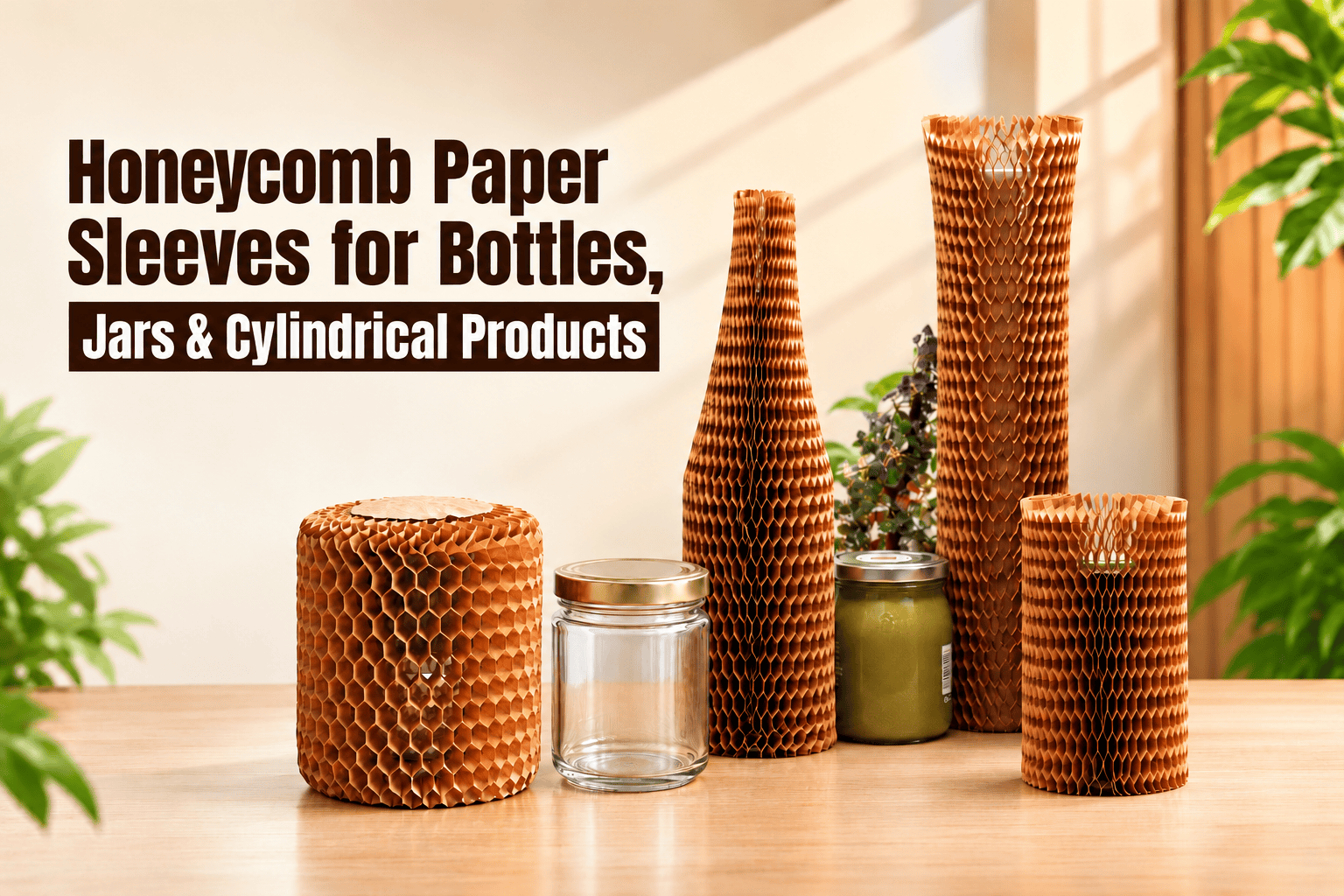
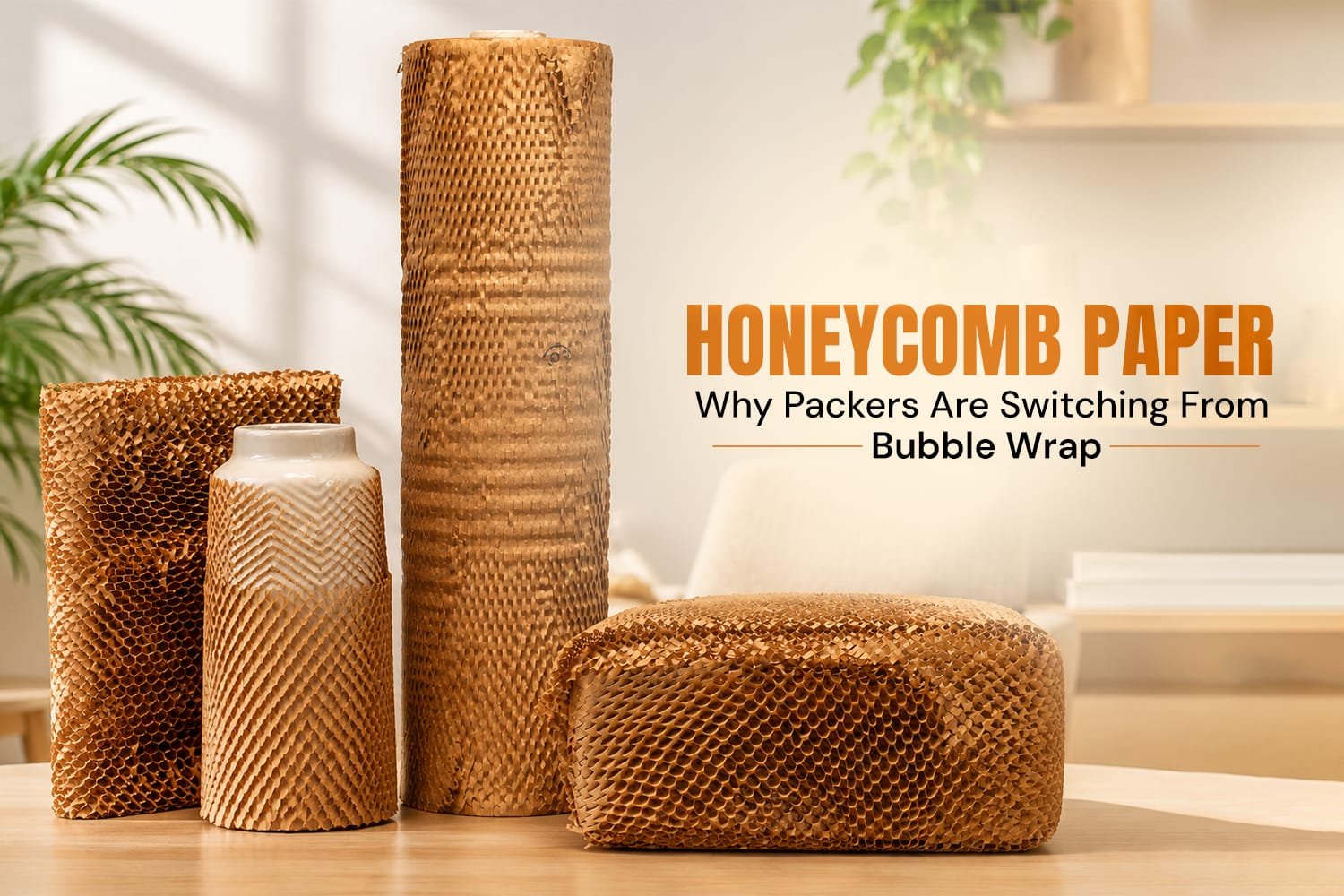
Kraft paper, cut so it opens up in a 3D honeycomb structure when you pull it. Flat on the roll, it looks like ordinary paper, which is part of why many sellers see it as an easy entry point into eco friendly paper wrapping. Stretch it and it turns into a mesh of little cells that sit around the product like a cushion.
The cells matter. A flat sheet takes a knock in one spot, while the cells spread the force around. EcoCushion says its paper stretches to approximately 1.5 times its original length, which means a roll goes further than the label suggests. The actual coverage depends on how the paper is stretched and how it is used during packing. It also bends round odd shapes easily, handy when you’re packing bottles in the morning and picture frames after lunch.
t
Does the cushioning hold up?
Honeycomb paper is increasingly being adopted by businesses across the world as a paper-based alternative to plastic bubble wrap for protective packaging. Its protective strength and cost effectiveness makes it suitable for wrapping a range of products, from glassware and ceramics to cosmetics, home décor and other fragile items.
But when it comes to replacing protective packaging, performance matters as much as sustainability. That’s why product testing is important.
At EcoCushion Paper, our honeycomb paper packaging has undergone drop testing and has received certification for the same from the Indian Institute of Packaging (IIP). This provides independent validation of its performance under the tested conditions and gives businesses greater confidence when evaluating it as an alternative to conventional plastic cushioning materials.
As with any packaging material, the right application and packing method matter. We recommend testing with your actual products and shipping configurations before making a large-scale switch.
What You Can Pack With It
Glass jars and food containers. Skincare and cosmetic bottles. Ceramics and small kitchen tools. Frames, ornaments and gift items that don’t fit neat boxes. Wider rolls also cover furniture panels and industrial parts, implying that honeycomb paper can ideally be used to wrap any product that needs protection/ cushioning in transit.
Having said that, unlike bubble wraps, one size doesn’t fit all for honeycomb paper. There are a range of sizes – widths and lengths available to choose from depending on the size and nature of products to be wrapped. Heavier or more fragile things may need extra layers and extra cushioning inside the carton as well.
Picking the Right Width and Length
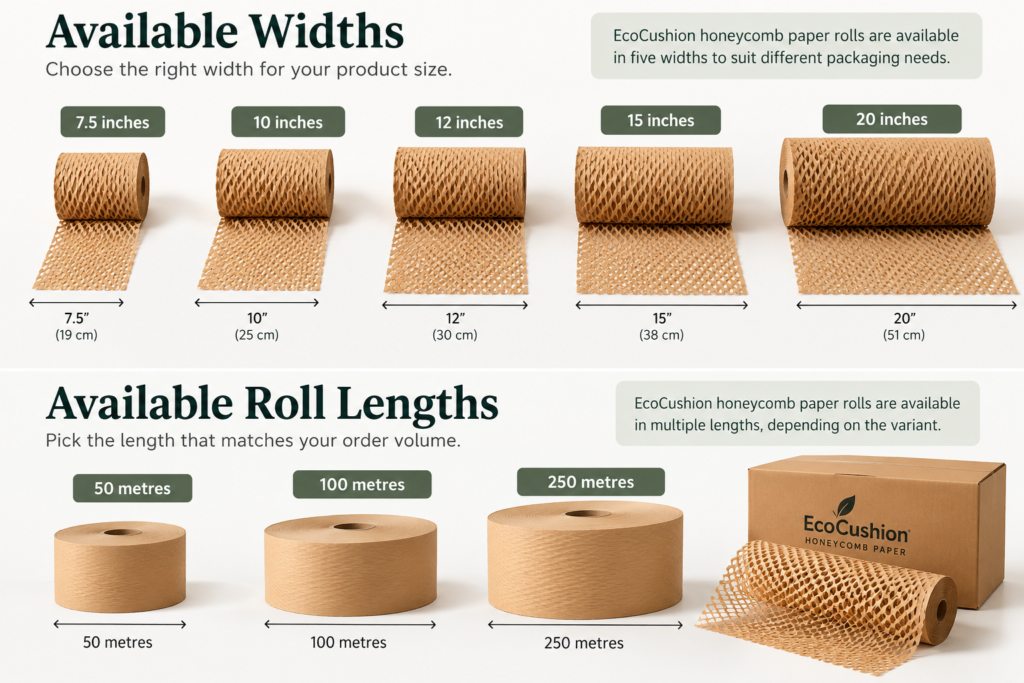
Most packing tables end up using one roll size for everything. It’s easy, but it wastes paper. A wide roll around a small lip balm leaves a pile of offcuts, and a narrow roll on a framed painting means taping scraps together.
EcoCushion’s rolls come in multiple widths, ranging from 6 inches to 20 inches. The narrow ones suit jewellery, medicines and small cosmetics. The middle sizes handle skincare bottles, perfume, gift packs and general kitchenware. The widest is meant for artwork, photo frames and furniture parts. This is to enable businesses to choose the ideal width to ensure cost and packaging optimization.
Length matters too. Rolls come in 10, 50, 100 and 250 metres, depending on the variant. A small seller can manage with shorter rolls. If you ship more, longer ones mean fewer stops to swap a roll mid-shift. Check which one suits you best.
A quick way to estimate: say you use about 2 metres per order and ship 100 orders a day. That’s 200 metres daily, or roughly 5,000 metres over 25 working days. Your numbers will differ with product size and how many layers you use, but even a rough figure beats guessing.
How to Start Switching to Eco-Friendly Packaging Without the Risk
Pick two or three products, the ones that break most often, and trial honeycomb paper on those first. Ensure to stretch the paper, to not compress the packed item and that there’s no empty space in the boxes. Count how many metres you use per order, note how many come back damaged, and read what customers say in their reviews. If breakage stays the same or drops, you can widen the switch. If it climbs, add a layer and test again.
EcoCushion sells honeycomb paper rolls in several widths and lengths, with a few colour options. Have a look at EcoCushion Paper and see which eco friendly paper option suits your eco-friendly packaging needs.